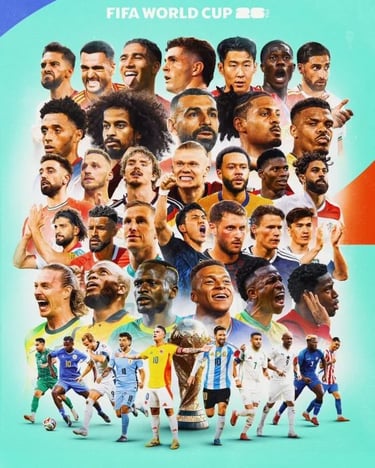
2026 World Cup
2026 World Cup Products
2026 World Cup Dates
2026 World Cup Dates: Full Schedule, Key Matches & What to Expect
The 2026 World Cup dates are one of the most searched topics among football fans worldwide. As the biggest tournament in international football expands to a new format, fans are eager to know when it starts, when it ends, and how the schedule will unfold.
In this guide, you’ll find everything you need to know about the 2026 FIFA World Cup schedule, including key dates, match structure, and important milestones.
When Does the 2026 World Cup Start?
The 2026 World Cup is scheduled to kick off in June 2026. The opening match is expected to take place in one of the host nations, marking the beginning of the largest World Cup in history.
Although FIFA may finalize exact fixtures closer to the tournament, the competition is planned to begin in early June 2026.
2026 World Cup Final Date
The final match of the tournament is expected to be played in mid-July 2026.
This means the tournament will last approximately 5 to 6 weeks, similar to previous editions but with more matches due to the expanded format.
Key 2026 World Cup Dates (Expected Timeline)
Here’s a breakdown of the most important dates:
Opening Match: Early June 2026
Group Stage: June 2026
Round of 32: Late June 2026 (new stage)
Round of 16: Early July 2026
Quarterfinals: Early July 2026
Semifinals: Mid-July 2026
Final: Mid-July 2026
New Format and Its Impact on Dates
The 2026 tournament will feature 48 teams, expanding from the traditional 32-team format. This change significantly impacts the schedule:
More matches overall
Introduction of a Round of 32
Longer group stage duration
More rest days between knockout matches
Because of this, the 2026 World Cup dates span a slightly longer period than previous tournaments.
Host Countries and Time Zones
The 2026 World Cup will be hosted across three countries:
United States
Canada
Mexico
This multi-country hosting means:
Matches will be played across different time zones
Kick-off times will vary significantly
Global audiences will have more flexible viewing options
Why the 2026 World Cup Dates Matter
Understanding the 2026 World Cup schedule is important for:
Planning travel and match attendance
Booking accommodations early
Scheduling watch parties
Following your favorite teams throughout the tournament
Fans and content creators alike rely on these dates to prepare for one of the most-watched sporting events in the world.
When Will the Full Schedule Be Released?
FIFA typically releases the official match schedule about 1 year before the tournament. This includes:
Exact match dates
Stadium assignments
Kick-off times
Team groupings
So, expect the finalized 2026 World Cup dates and fixtures to be confirmed sometime in 2025.
Final Thoughts
The 2026 World Cup dates mark an exciting new era in football history. With more teams, more matches, and three host countries, this tournament promises to be bigger than ever.
Whether you're planning to attend matches in person or watch from home, staying updated on the official schedule will help you make the most of the experience.
Host Countries of the 2026 World Cup
Host Countries of the 2026 World Cup: Everything You Need to Know
The host countries of the 2026 World Cup make this tournament truly historic. For the first time ever, the FIFA World Cup will be hosted by three nations, bringing a new level of scale, diversity, and global excitement to football fans worldwide.
In this guide, we’ll explore the host countries, key cities, and what makes the 2026 tournament unique.
Which Countries Are Hosting the 2026 World Cup?
The 2026 FIFA World Cup will be jointly hosted by:
United States
Canada
Mexico
This marks the first time in history that three countries will host a single World Cup tournament.
Why Three Host Countries?
FIFA selected a multi-country hosting model to:
Accommodate the expanded 48-team format
Provide more stadiums and infrastructure
Increase global accessibility for fans
Share economic and tourism benefits
The joint bid from the three North American nations was chosen for its strong infrastructure, existing stadiums, and experience hosting major sporting events.
United States: The Main Host
The United States will host the majority of matches, including:
Most group stage games
Knockout rounds
The 2026 World Cup Final
Key U.S. Host Cities:
New York / New Jersey
Los Angeles
Dallas
Miami
Atlanta
Seattle
The U.S. brings world-class stadiums, advanced transportation systems, and a massive sports market.
Canada: Expanding the Global Reach
Canada will host several matches, helping expand the tournament’s reach into northern North America.
Canadian Host Cities:
Toronto
Vancouver
Canada’s inclusion highlights the growing popularity of football (soccer) in the country and its ability to host global events.
Mexico: A Historic Milestone
Mexico will make history by becoming the first country to host the World Cup three times (after 1970 and 1986).
Mexican Host Cities:
Mexico City
Guadalajara
Monterrey
Mexico is known for its passionate football culture, making it one of the most exciting hosts in the tournament.
How Matches Will Be Distributed
United States: Majority of matches (including final)
Canada: Group stage matches
Mexico: Opening matches and group stage games
This distribution ensures balanced travel while maximizing fan engagement across all three countries.
Benefits of Multi-Country Hosting
The host countries of the 2026 World Cup offer several advantages:
1. Larger Stadium Capacity
More venues mean more fans can attend matches live.
2. Better Infrastructure
All three countries already have modern stadiums and transport systems.
3. Tourism Growth
Millions of fans are expected to travel across North America.
4. Cultural Diversity
Fans will experience different cultures, cuisines, and atmospheres.
Challenges to Consider
While exciting, multi-country hosting also brings challenges:
Travel distances between cities
Visa requirements across borders
Time zone differences
Logistics for teams and fans
However, organizers are working to streamline travel and coordination.
What This Means for Fans
For fans, the 2026 World Cup host countries offer a unique opportunity:
Watch matches in multiple countries
Experience diverse football cultures
Explore North America during one event
Whether attending in person or watching remotely, this tournament promises a truly global experience.
Final Thoughts
The host countries of the 2026 World Cup—the United States, Canada, and Mexico—are set to deliver the biggest and most ambitious tournament in FIFA history.
With expanded teams, world-class venues, and three vibrant nations, the 2026 World Cup will redefine how global sporting events are hosted.
2026 World Cup Format and Rules: Complete Guide to the New Tournament Structure
The 2026 World Cup format and rules will introduce the biggest बदलाव in FIFA World Cup history. With an expanded tournament, new match structures, and updated regulations, fans can expect a completely different viewing experience.
In this guide, we break down everything you need to know about the 2026 FIFA World Cup format, including group stages, knockout rounds, and key rules.
Overview of the 2026 World Cup Format
The 2026 FIFA World Cup will feature:
48 teams (expanded from 32)
3 host countries: United States, Canada, and Mexico
A total of 104 matches
A tournament duration of approximately 5–6 weeks
This expansion significantly changes how teams qualify and compete.
Group Stage Format
In the new structure:
Teams are divided into 12 groups of 4 teams each
Each team plays 3 matches in the group stage
The top 2 teams from each group automatically advance
The 8 best third-placed teams also qualify
This means 32 teams will move on to the knockout stage.
Knockout Stage: Introduction of Round of 32
One of the biggest changes in the 2026 World Cup format and rules is the addition of a new round:
Knockout Rounds Include:
Round of 32 (new)
Round of 16
Quarterfinals
Semifinals
Final
This creates more high-stakes matches and opportunities for underdog teams.
Match Rules and Regulations
1. Standard Match Duration
90 minutes (two halves of 45 minutes)
Added stoppage time
2. Extra Time
If a knockout match ends in a draw:
Two periods of 15 minutes extra time are played
3. Penalty Shootout
If still tied:
The match is decided by penalty kicks
Points System in Group Stage
Teams earn points as follows:
Win: 3 points
Draw: 1 point
Loss: 0 points
Tiebreaker Rules:
If teams are level on points, ranking is decided by:
Goal difference
Goals scored
Head-to-head results
Fair play points
Drawing of lots (if necessary)
Substitution Rules
The 2026 World Cup is expected to continue modern substitution rules:
Up to 5 substitutions per match
Additional substitution allowed in extra time
Concussion substitutes (if applicable under FIFA rules)
VAR and Technology
Technology will play a major role in enforcing rules:
VAR (Video Assistant Referee) for key decisions
Goal-line technology
Semi-automated offside detection
These tools help improve accuracy and fairness in matches.
Fair Play and Discipline Rules
Players and teams must follow strict discipline guidelines:
Yellow cards accumulate across matches
Red cards result in suspension
Serious fouls may lead to additional bans
Fair play points can also affect group rankings.
Key Differences from Previous World Cups
The 2026 World Cup format and rules differ in several major ways:
1. More Teams
From 32 to 48 teams
2. More Matches
From 64 to 104 matches
3. New Knockout Round
Introduction of Round of 32
4. Expanded Qualification
More countries from every continent can qualify
Why the New Format Matters
The updated format aims to:
Increase global participation
Give smaller nations more opportunities
Boost entertainment value with more matches
Expand the global reach of football
However, it also raises concerns about player fatigue and scheduling.
Final Thoughts
The 2026 World Cup format and rules represent a bold evolution of the world’s biggest sporting event. With more teams, more matches, and a redesigned structure, the tournament promises to be more inclusive and competitive than ever before.
Fans should prepare for a longer, more dynamic World Cup filled with surprises, emerging teams, and unforgettable moments.
2026 World Cup Host Cities
2026 World Cup Host Cities: Complete Guide to All Venues
The 2026 World Cup host cities are set to make football history. For the first time ever, the FIFA World Cup will be hosted across three countries and multiple major cities, offering fans a unique and global tournament experience.
In this guide, we’ll explore all the confirmed host cities, what makes each location special, and what fans can expect when attending matches.
Overview of 2026 World Cup Host Cities
The 2026 FIFA World Cup will take place across:
United States
Canada
Mexico
A total of 16 host cities have been selected to stage matches throughout the tournament.
United States Host Cities (11 Cities)
The United States will host the majority of matches across 11 cities:
New York City / New Jersey (MetLife Stadium area)
Los Angeles
Dallas
Miami
Atlanta
Seattle
San Francisco Bay Area
Boston
Philadelphia
Houston
Kansas City
Highlights:
The U.S. will host the majority of matches, including the final
Stadiums are among the largest and most modern in the world
Cities span multiple time zones for global broadcasting
Canada Host Cities (2 Cities)
Canada will host matches in:
Toronto
Vancouver
Highlights:
First time Canada hosts World Cup matches
Modern stadiums and strong football fan base
Ideal destinations for international fans
Mexico Host Cities (3 Cities)
Mexico will host matches in:
Mexico City
Guadalajara
Monterrey
Highlights:
Mexico becomes the first country to host three World Cups
Rich football culture and passionate fans
Historic stadiums like Estadio Azteca
How Matches Are Distributed Across Cities
United States: Majority of games, including knockout rounds and final
Canada: Group stage matches
Mexico: Opening matches and group stage games
This structure ensures a balanced experience across all host nations.
What Makes These Host Cities Special?
1. World-Class Stadiums
All selected cities feature modern venues with large capacities.
2. Diverse Fan Experiences
From the beaches of Miami to the culture of Mexico City, each city offers a unique atmosphere.
3. Easy Travel Options
North America’s strong transportation network makes it easier for fans to travel between cities.
4. Cultural Variety
Fans can experience different languages, food, and traditions across three countries.
Travel Tips for Visiting Host Cities
If you plan to attend matches:
Book flights and hotels early
Check visa requirements for each country
Plan travel routes between cities
Consider time zone differences
Why the 2026 Host Cities Matter
The 2026 World Cup host cities are key to delivering the largest tournament in history. With 48 teams and over 100 matches, these cities will play a major role in shaping the fan experience.
Final Thoughts
The 2026 World Cup host cities offer an unprecedented global football experience. With 16 cities across the United States, Canada, and Mexico, fans will enjoy a tournament that is bigger, more diverse, and more exciting than ever before.
Whether you’re attending in person or watching from home, knowing the host cities helps you stay connected to the action.
2026 World Cup Schedule
2026 World Cup Schedule: Complete Dates, Fixtures & Key Matches
The 2026 World Cup schedule is one of the most anticipated topics for football fans worldwide. With the tournament expanding to 48 teams across three host countries—United States, Canada, and Mexico—the schedule promises more matches, excitement, and global action than ever before.
In this guide, we break down the full 2026 FIFA World Cup schedule, including group stage dates, knockout rounds, and the final.
When Does the 2026 World Cup Start?
The 2026 World Cup is scheduled to kick off in early June 2026. The opening match is expected to be held in one of the Mexican host cities, setting the stage for a month-long celebration of football.
2026 World Cup Final Date
The final match is scheduled for mid-July 2026 in the United States. With a total of 104 matches, the tournament will span approximately 5–6 weeks, making it the longest World Cup in history.
Key Dates and Phases of the 2026 World Cup Schedule
Here’s a breakdown of the main stages and dates:
PhaseDates (Expected)NotesOpening MatchEarly June 2026Likely in Mexico CityGroup StageEarly – Late June 202612 groups of 4 teams eachRound of 32Late June 2026Newly introduced stage due to 48 teamsRound of 16Early July 2026Knockout matches beginQuarterfinalsEarly July 2026Top 8 teams competeSemifinalsMid-July 2026Last 4 teams battle for the finalThird Place MatchMid-July 2026Usually one day before finalFinalMid-July 2026Tournament concludes in the U.S.
Group Stage Schedule
The group stage will feature:
12 groups of 4 teams
Each team plays 3 matches
The top two teams from each group advance automatically
The 8 best third-placed teams also advance
With 48 teams, the group stage will feature more matches than ever, giving fans plenty of action.
Knockout Stage Schedule
The knockout rounds include:
Round of 32 (new round)
Round of 16
Quarterfinals
Semifinals
Third-place match
Final
Matches tied after 90 minutes will go to extra time and, if necessary, penalty shootouts.
Host Countries and Time Zones
The 2026 World Cup schedule spans three countries:
United States
Canada
Mexico
Fans will need to consider different time zones, especially for TV broadcasts or traveling between matches.
Why the 2026 World Cup Schedule Is Important
Helps fans plan travel and ticket bookings
Allows broadcasters to prepare live coverage
Helps teams and coaches manage rest and training schedules
Enables fans to follow favorite teams in all stages
Staying updated on the 2026 World Cup schedule is essential for both attendees and remote viewers.
When Will the Official Schedule Be Released?
FIFA usually releases the final schedule about one year before the tournament. This includes:
Match dates and kick-off times
Stadium assignments
Official group pairings
Expect the official 2026 World Cup schedule to be confirmed in 2025.
Final Thoughts
The 2026 World Cup schedule marks the start of a historic, expanded tournament. With 48 teams, 104 matches, and three host countries, football fans are in for an unprecedented spectacle.
Knowing the schedule in advance helps you plan attendance, watch live games, and make the most of this global event.